
The Vision
Costantza Sbokou - Costantakopoulou
A Centre for Weaving Heritage
As a trained architect and third-generation descendant of the Sbokou family, I returned to Anogeia, to my grandmother Agapi's ancestral home, with a clear mission: to restore, redefine, and reposition the art of weaving within its authentic cultural and scientific context.
This is not simply a restoration of a space, but a revival of a spirit; an interweaving of memory, matter, and meaning.
Architectural Restoration
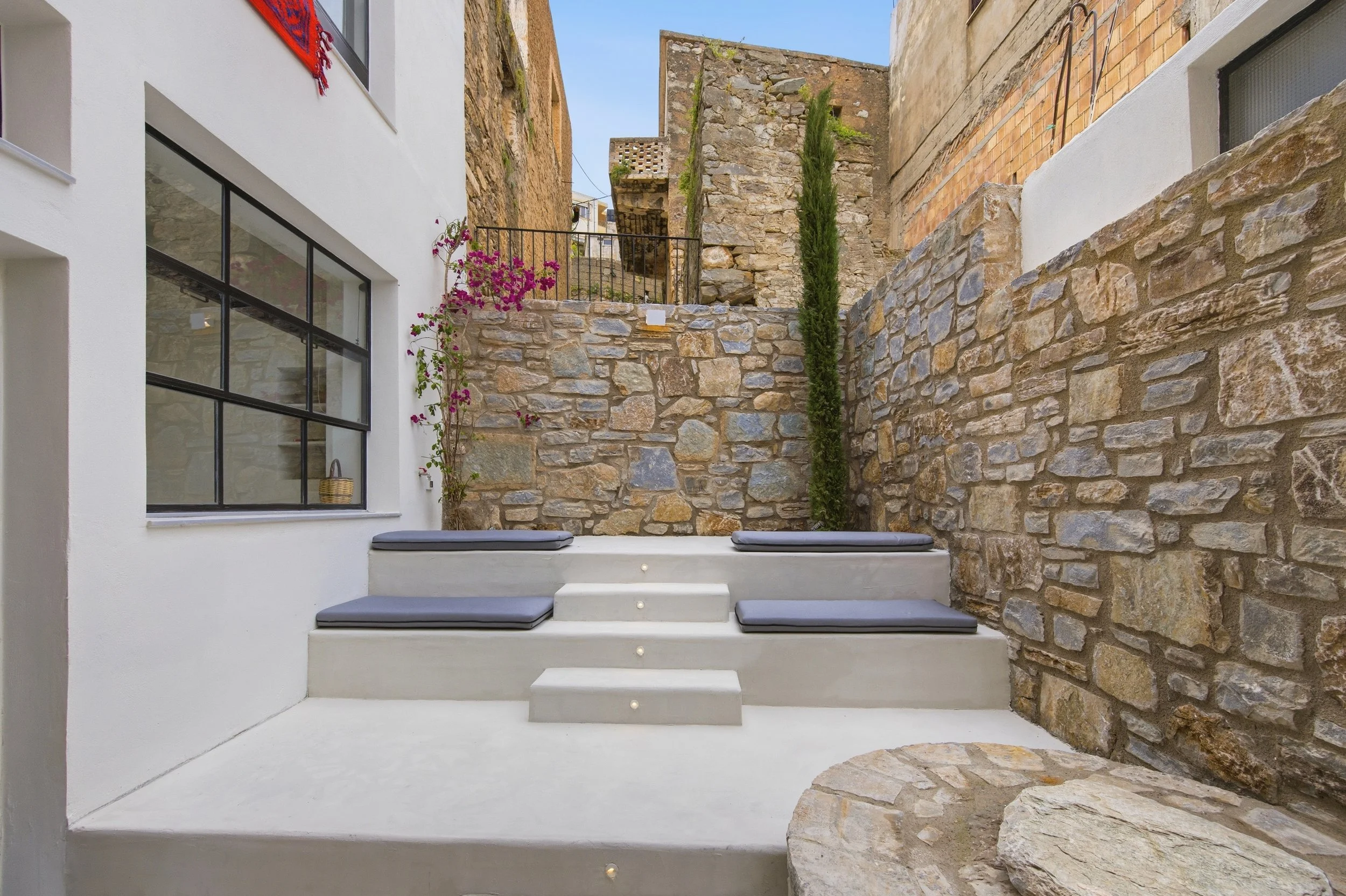
The original family residence was built with the bare essentials, as part of the economy of its time. Today it is being carefully restored to function both as a living museum and an active workshop. During the investigative process, an interior courtyard was uncovered, surrounded by the existing archetypal L-shaped concrete structure and a rediscovered well, which is now being brought back into use.
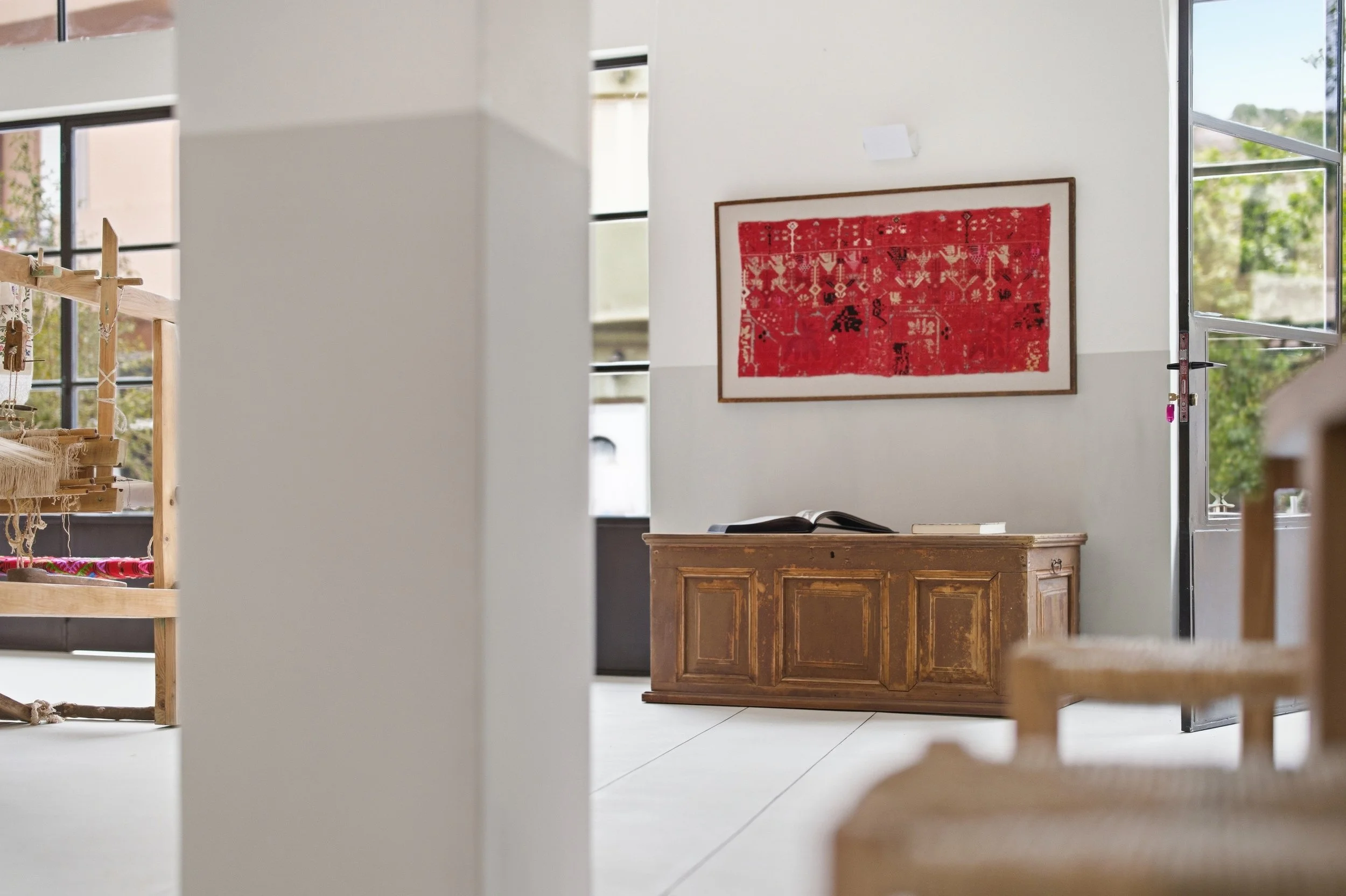
The architectural language draws from the local minimalism of Anogeia: stone, wood, raw steel, and lime; these materials have shaped the village's environment for centuries.
The design honors local simplicity while introducing a contemporary spatial clarity that invites reflection, interaction, and creation.
Design Philosophy
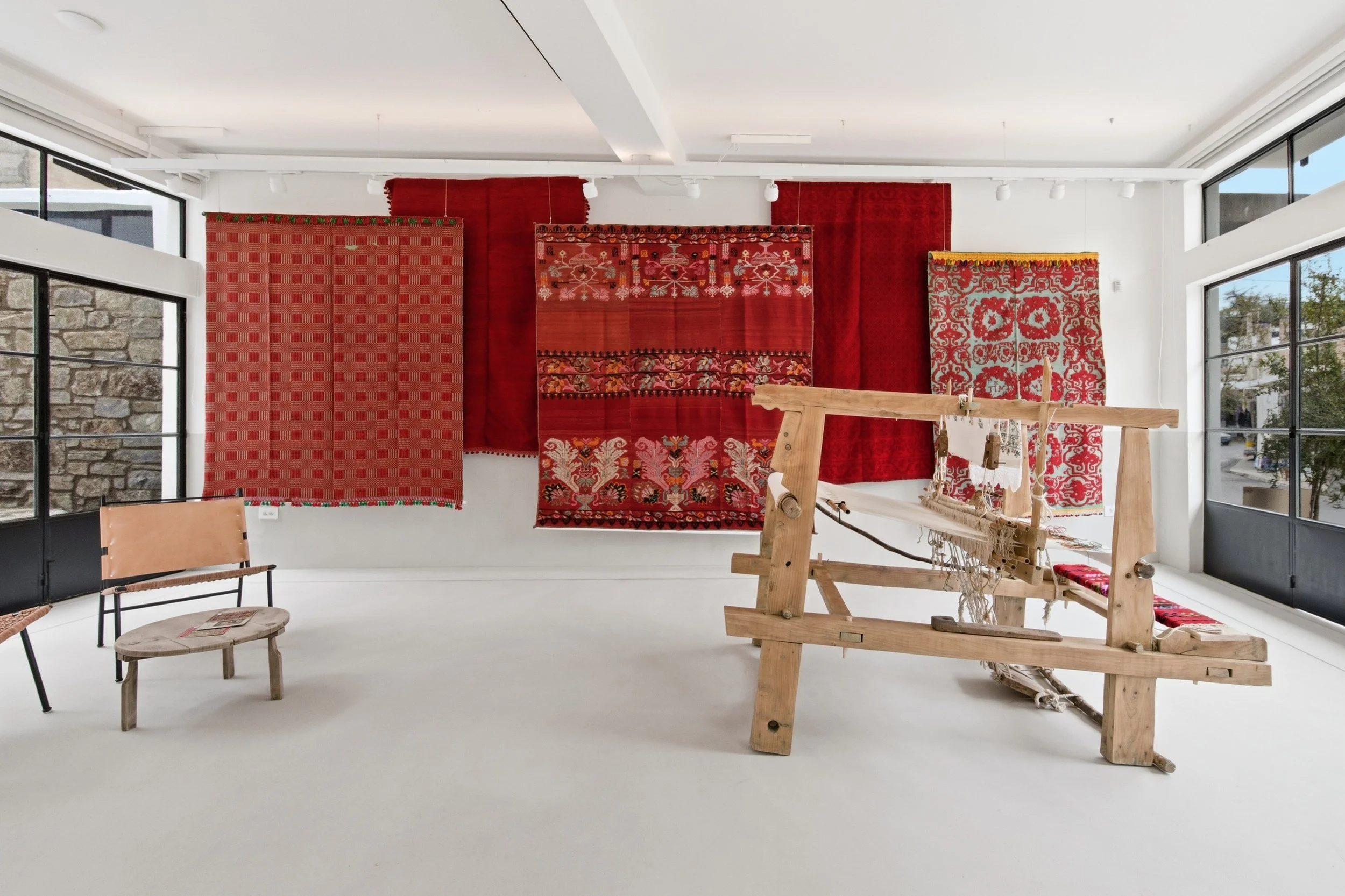
Anogeia Weaving House is not conceived as a static exhibition space, but as a living organism. It is a place where heritage is inhabited, experienced through its walls, light, textures, and the rhythms of the loom. The architecture functions as a vessel of memory, where ancestral knowledge is not only preserved but activated.
Exhibition
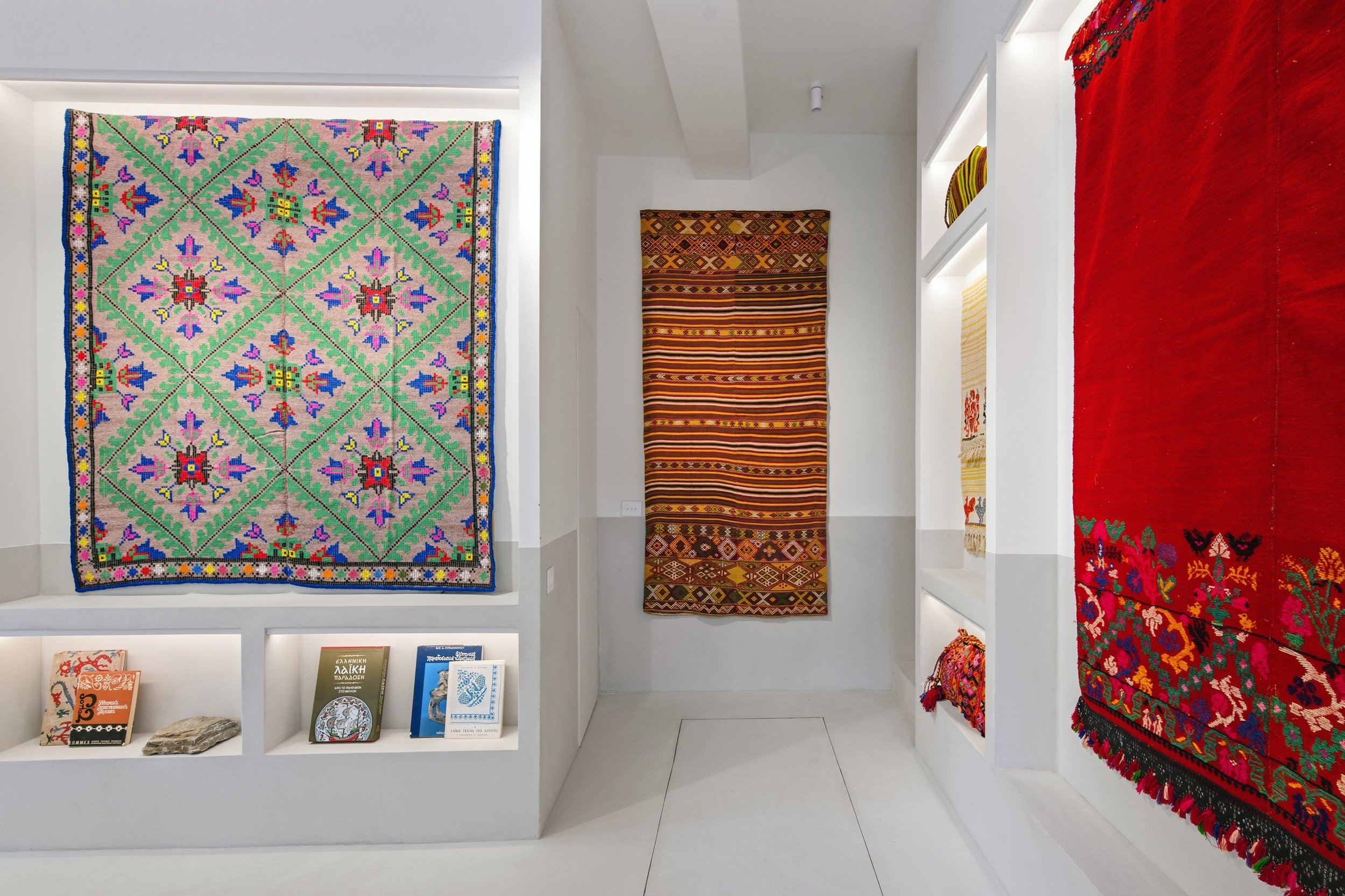
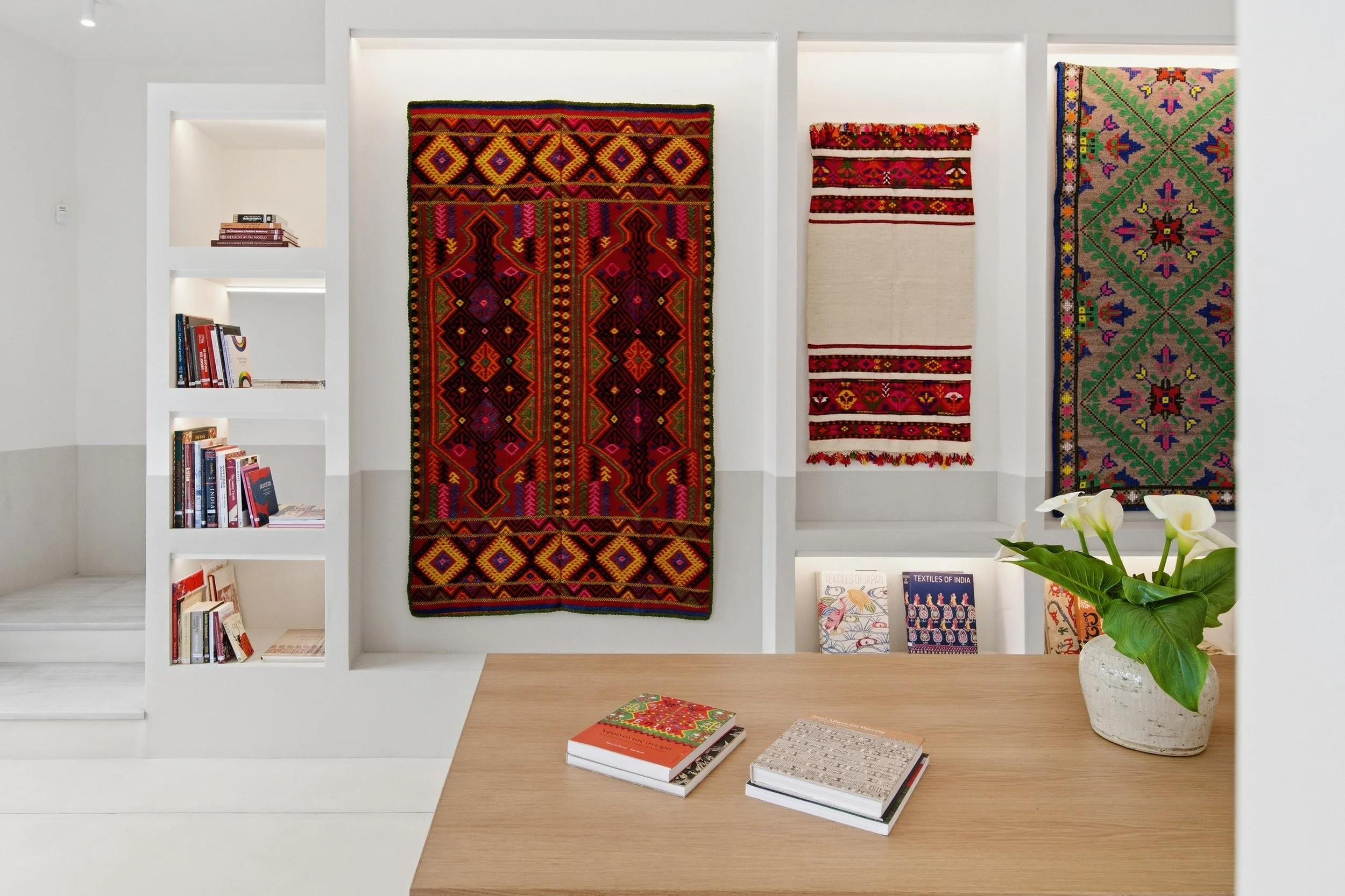
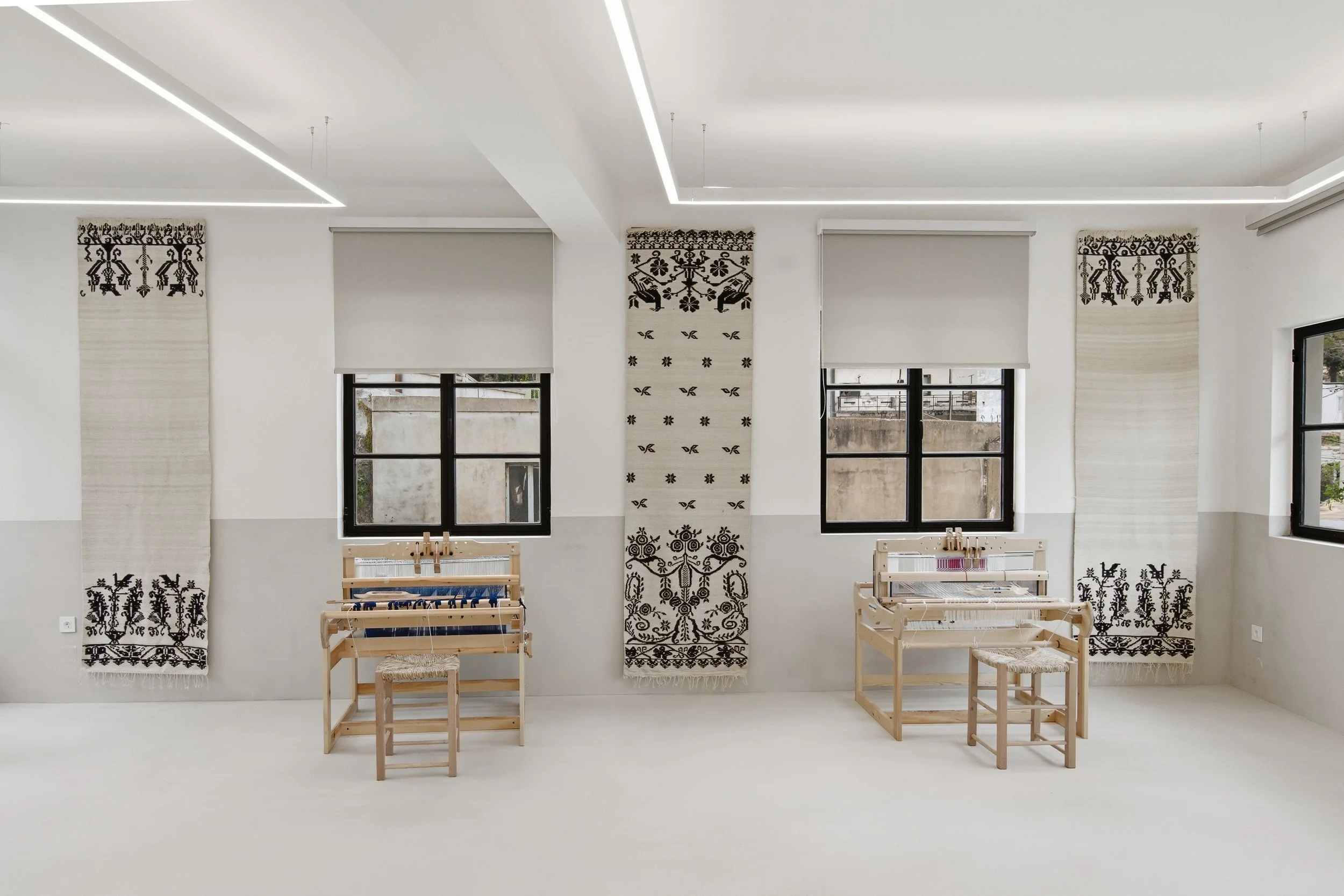
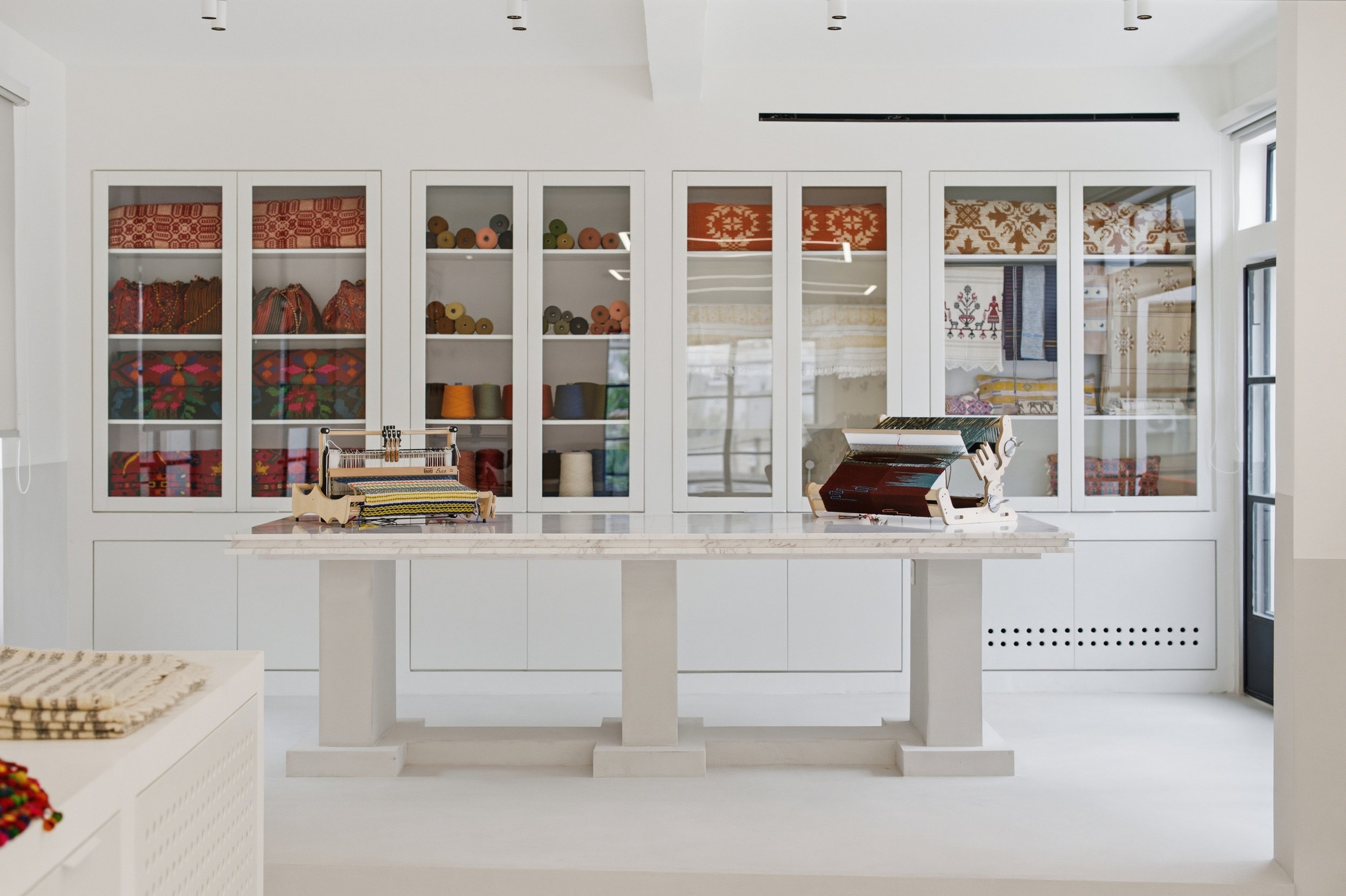
The permanent exhibition presents woven works from key families of the village, each piece a testament to inherited technique, symbolism, and identity. These textiles are more than objects; they are living records of matrilineal knowledge passed down from generation to generation.
By preserving the distinctive patterns, dyes, and loom types unique to Anogeia, the exhibition safeguards a cultural language expressed through fiber. Visitors engage not only with technique, but with the stories woven into warp and weft; threads that connect family, memory, and place.
Periodic Contemporary Exhibitions: "Tradition in Dialogue"
The Center aspires to host a dynamic program of temporary exhibitions featuring artist-weavers who reapproach traditional techniques through contemporary perspectives. Creators — both local and international — will engage with the permanent collection not as mere observers, but as active participants in conversation.
Their work is placed in direct dialogue with the historical objects, igniting discussions that cut across time, material, and meaning.
Through this curatorial approach, tradition is not preserved in isolation but reactivated, challenged, expanded, and reimagined for new generations.
Educational Programs: Weaving Knowledge in an Interdisciplinary Framework
The Center will offer a robust educational platform that bridges art with scientific knowledge. Through lectures, seminars, and curated exhibitions, visitors will explore the anthropology, chemistry, and mathematics embedded in weaving traditions.
From the symbolic language of patterns to the molecular behavior of natural dyes and the geometric logic of looms, weaving emerges as a lens through which science and culture converge. These programs invite researchers, students, and artisans to approach the loom not merely as a tool of creation, but as a carrier of encoded knowledge — where threads convey stories, formulas, and philosophies.
In Situ Workshops: Art & Craft as Dialogue
The Center will offer experiential, hands-on workshops that invite residents and visitors to engage directly with the loom. These activities strengthen the intergenerational transmission of knowledge, where elders share their lived experience and younger generations learn through practice.
At the same time, the workshops foster intercultural dialogue, welcoming international visitors who experience Cretan weaving not as spectators but as active participants. In this shared space, technique becomes language and the loom becomes a bridge — connecting generations, geographies, and perspectives through the universal rhythm of creation.
A Model for National Revival — A Scalable Framework
The Weaving Heritage Center in Anogia is not designed as a standalone initiative, but as a model — a seed from which a broader movement can grow. It represents a blueprint for how architecture, science, and community can converge to safeguard intangible heritage and revitalize traditional arts.
From the silks of Soufli to the intricate embroideries of Lefkada and the weaving traditions of Epirus, every region of Greece carries its own thread in a rich national tapestry. These traditions, though different in technique and symbolism, share a common vulnerability: the risk of being lost without meaningful preservation and renewal.
By establishing a replicable framework — grounded in architectural restoration, scientific documentation, and active community participation — the Anogia Center offers a blueprint for the revival of endangered weaving practices across the country. It invites the formation of a network of regional hubs, rooted in local identity yet united by a shared commitment to cultural sustainability and innovation.
Through thoughtful infrastructure and deep respect for tradition, the loom ceases to be a mere relic of the past and becomes a compass for the future — a tool through which stories are told, identities are shaped, and possibilities are woven, thread by thread, generation by generation.