
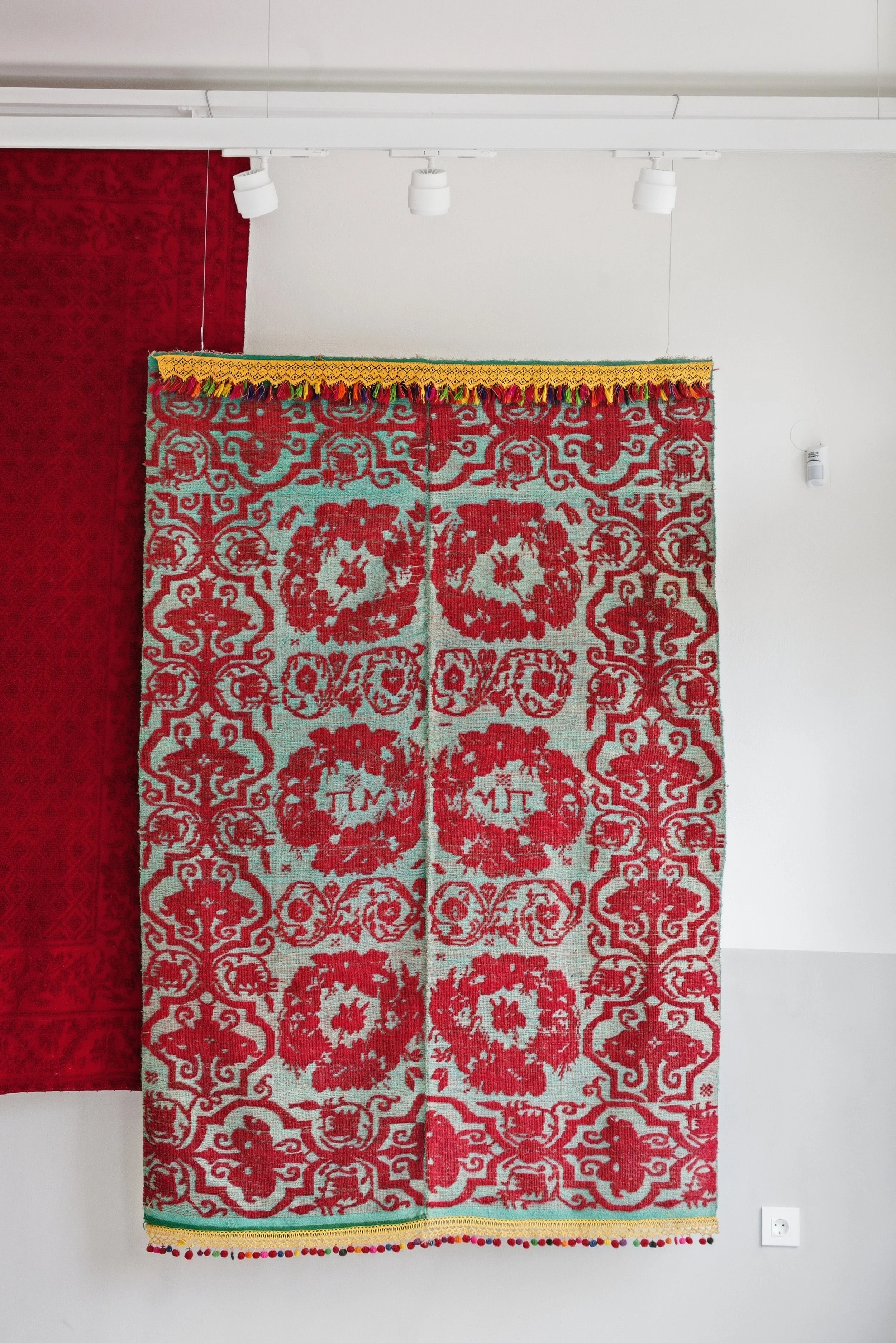
Family of Alexandros Ntagiantas
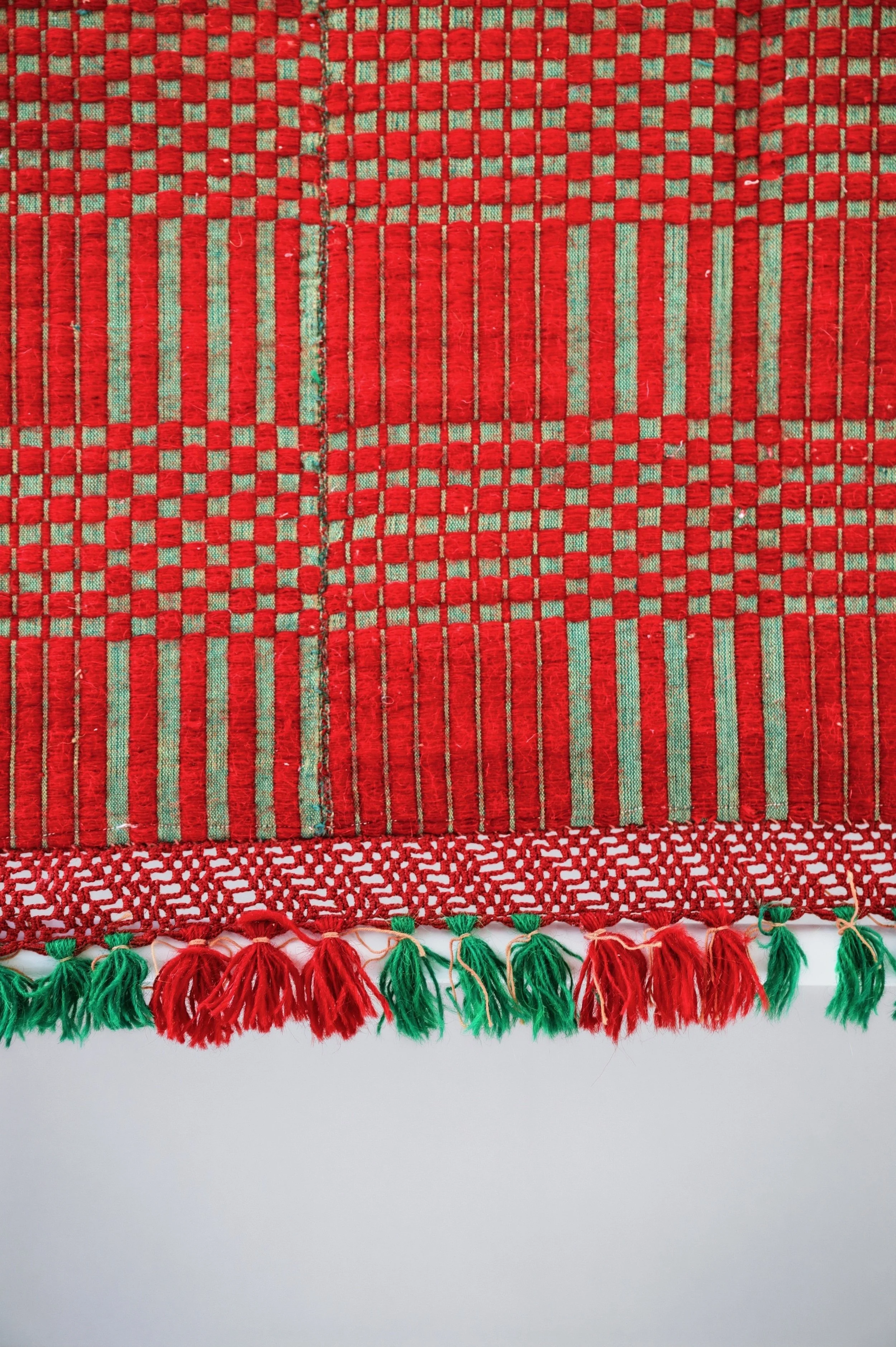
Patania
c. 1934 – 1945
139 x 226 cm
Woven in green and red using very fine woolen yarn known as mitos, wool taken from a specific part of the animal (the belly), processed into yarn through a handmade procedure of washing and spinning on a distaff, employing the demanding kouskousé weaving technique. The textile was created by Penelope Ntagianta, mother of Alexandros Ntagiantas, and bears her initials, P.N., incorporated into the design.
During the destruction of Anogia by the Germans, the patania was hidden inside a well, protected by a shepherd's cloak, and was later found nearly intact, a rare document of material memory that survived the devastation.
Its edges are adorned with yellow lace and multicolored woolen koumara (tassels), characteristic of the Anogian weaving aesthetic and the particular care devoted to formal woven pieces.
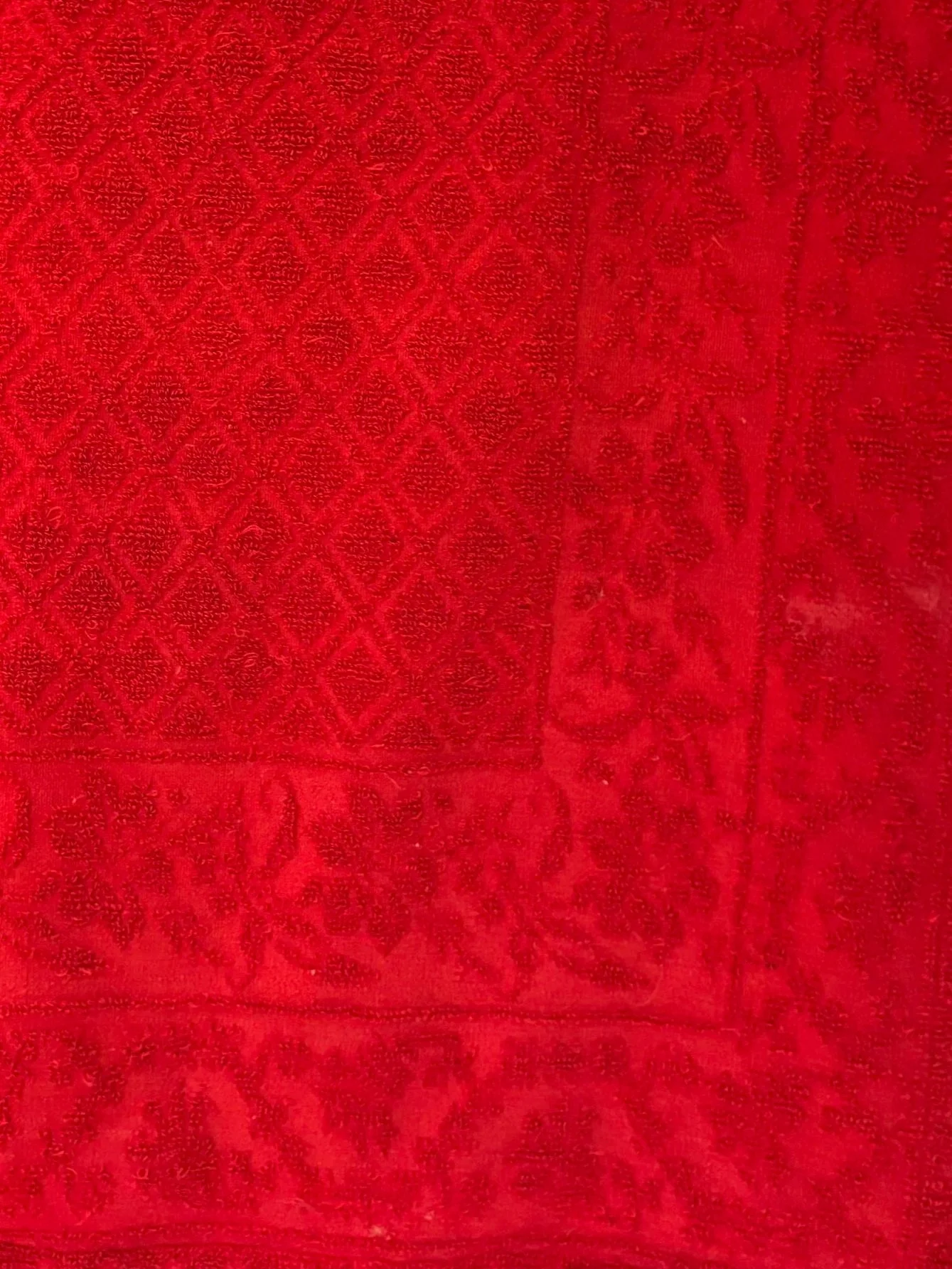
Family of Agapi Skoula (Houma)
Donated to Anogeia Weaving House
Patania
c. 1950
165 x 215 cm
Woven with the characteristic red, handmade woolen mitos yarn, using the kouskousé technique. It is described as kofti, meaning it is woven with both an internal and external pattern of the technique, which creates the distinctive motif through the weaving process itself. The textile features a double perimeter border with floral decoration, and geometric designs across the main body of the rug.
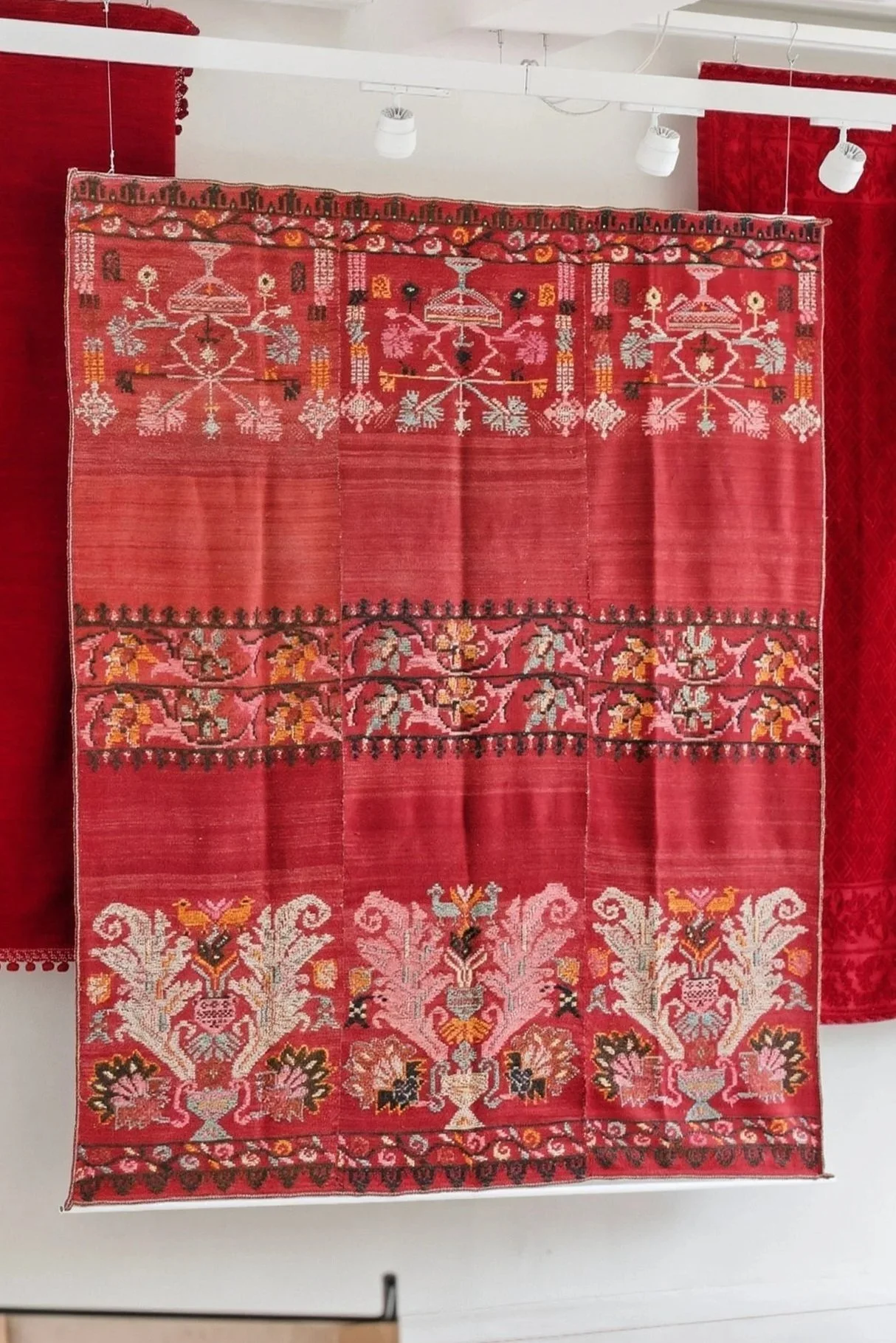
Family of Krystalia Xylouri
Velétza
c. 1950
216 x 235 cm
Composed of three panels joined together. Woven with woolen yarns in the period immediately following the war by her mother, Despoina, and later given to her as part of a dowry. The weaving was carried out using the chain technique, which is interlaced during the weaving process, creating characteristic linear and geometric patterns. The two sides of the textile bear different designs, as is common in Cretan weavings, where the "top" and "bottom" faces each have a distinct aesthetic. Up until its inclusion in the exhibition, the textile had been in everyday domestic use, preserving the living bond between tradition and contemporary life.
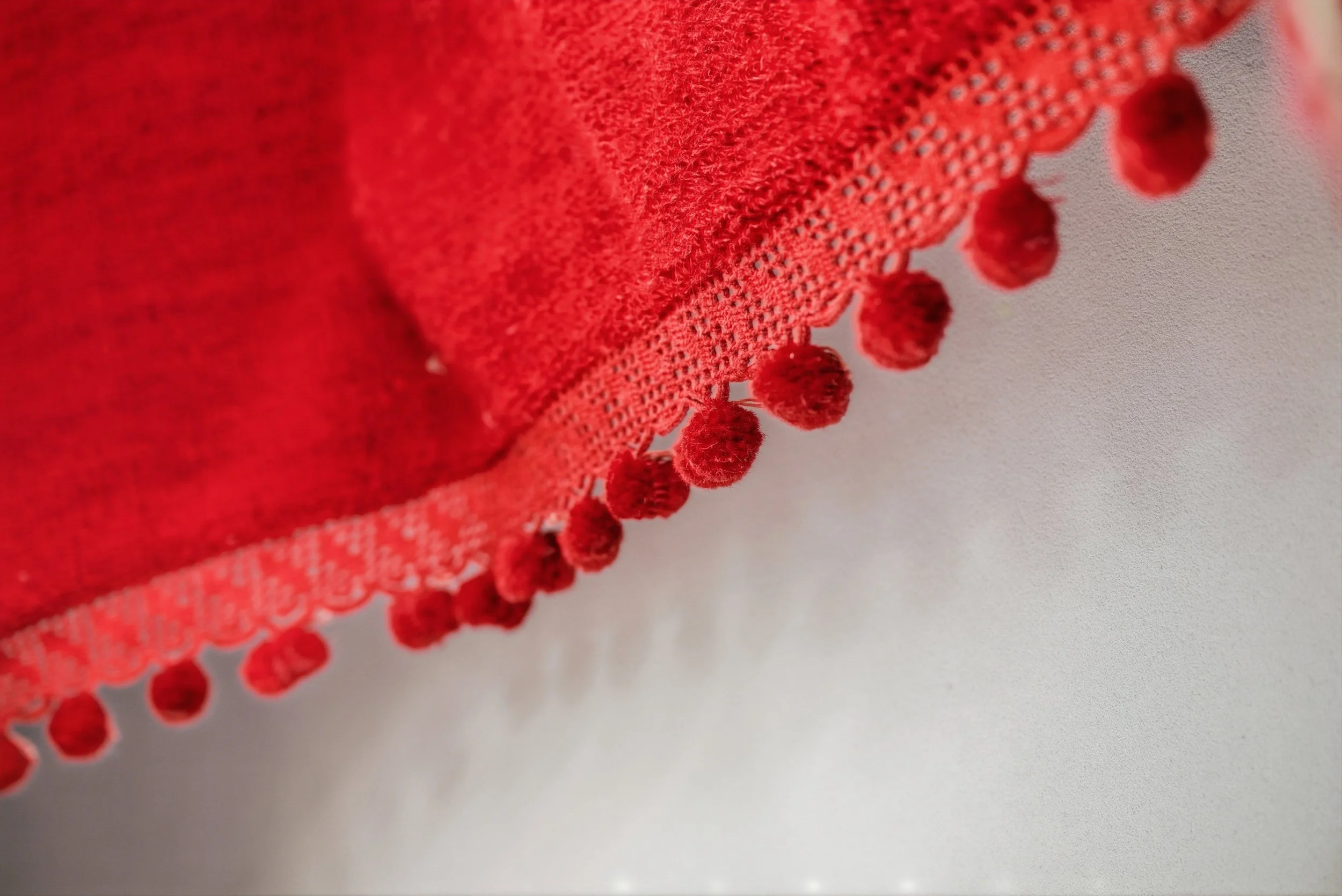
Family of Irini Andreadaki (Papadia)
Patania
c. 1950 – 1960
159 x 241 cm
Woven with red woolen mitos yarn wool from a specific part of the animal (the belly), processed into yarn through a handmade procedure of washing and spinning on a distaff, in the postwar period during the 1950s.
Family of Agapi Skoula (Houma)
Donated to Anogeia Weaving House
Deximati or Belentenia
c. 1950
195 x 225 cm
This cover was made using the deximati technique and woven by Choumadhena, mother of Agapis Skoula. The pattern was created through threading and the use of foot pedals, a process that allows the alternation of yarns to form the motif. The result is reversible: each side of the textile is the negative image of the other.
The technique required exceptional mathematical dexterity and a deep understanding of the logic of the loom, as it was based on a repeating "code" of movements and combinations that produced the final weave pattern.
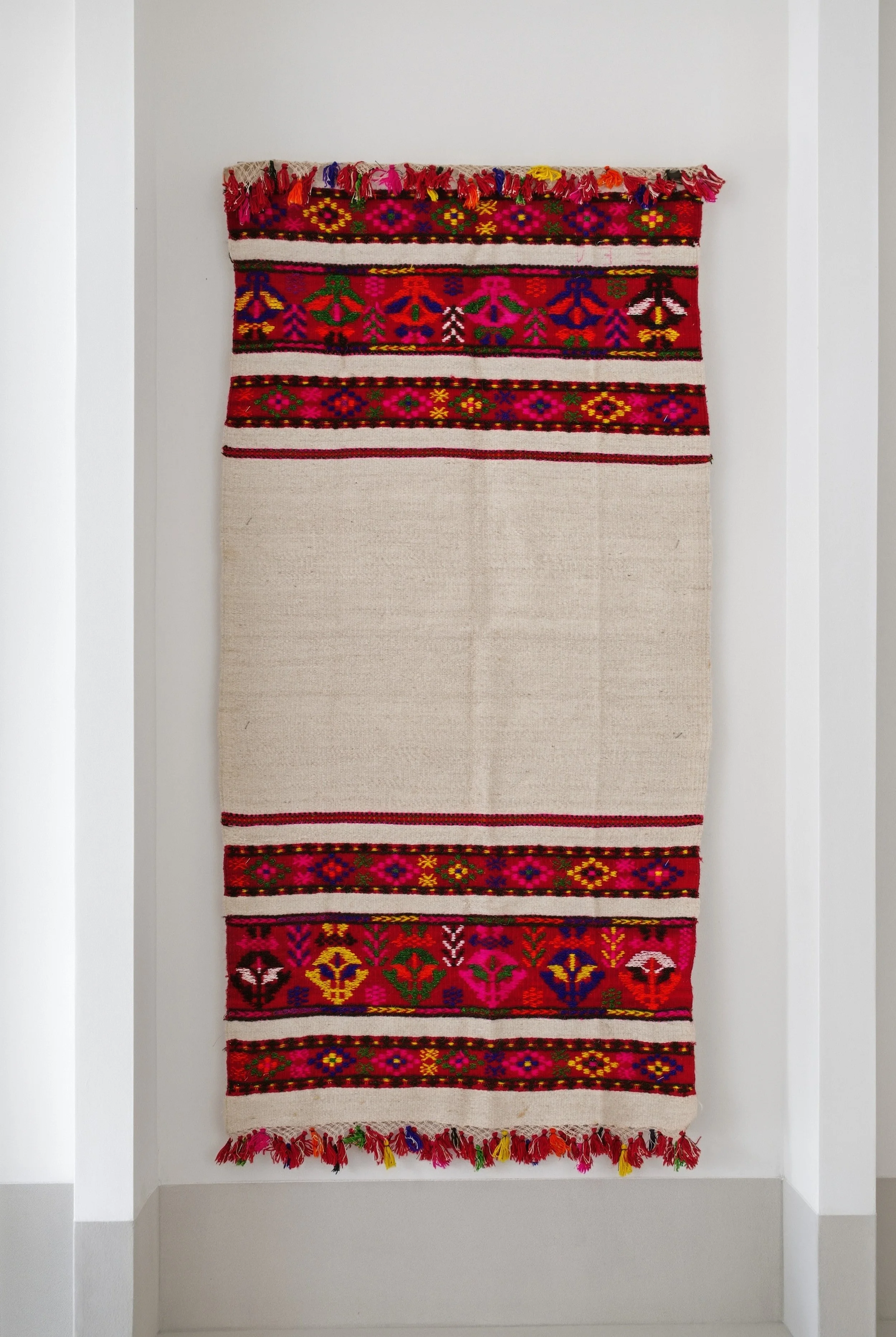
Family of Agapi Ximeri
Psomomandila
c. 1950
66 x 140 cm
The psomomandila (or artopano) is a traditional woven cloth of Greek domestic life. It was used during the bread-making process to cover the dough and protect it while rising, combining practical function with aesthetic care and a ceremonial character.
Woven with woolen yarns on a white background with multicolored flowers. The embroidery was created using the chain technique, which is interlaced during the weaving process, forming the characteristic decorative motifs.
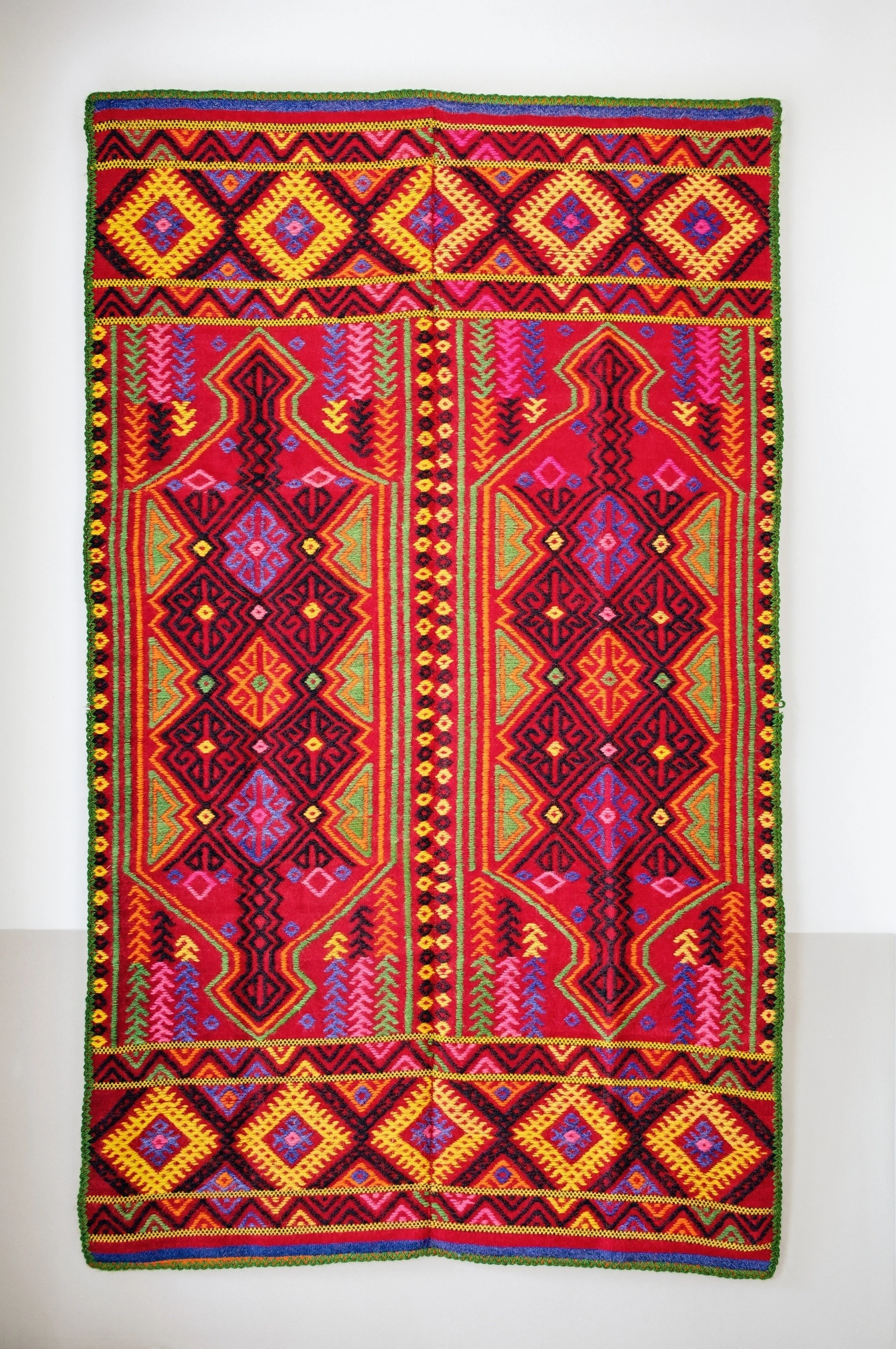
Family of Ilektra Pasparaki
"Byzantine" Rug
c. 1970–1980
123 x 206 cm
The rug was crafted from woolen yarns by Ilektra Pasparaki herself during the 1970s and is known as the "Byzantine." It is composed of two joined panels. The design was among the best-selling patterns exported abroad by Agapi Sbokou, and was particularly beloved by the wider public for its rich colors and geometric decoration, making it emblematic of its era. It was kept by Ilektra Pasparaki as a memento of her collaboration with Agapi Sbokou.
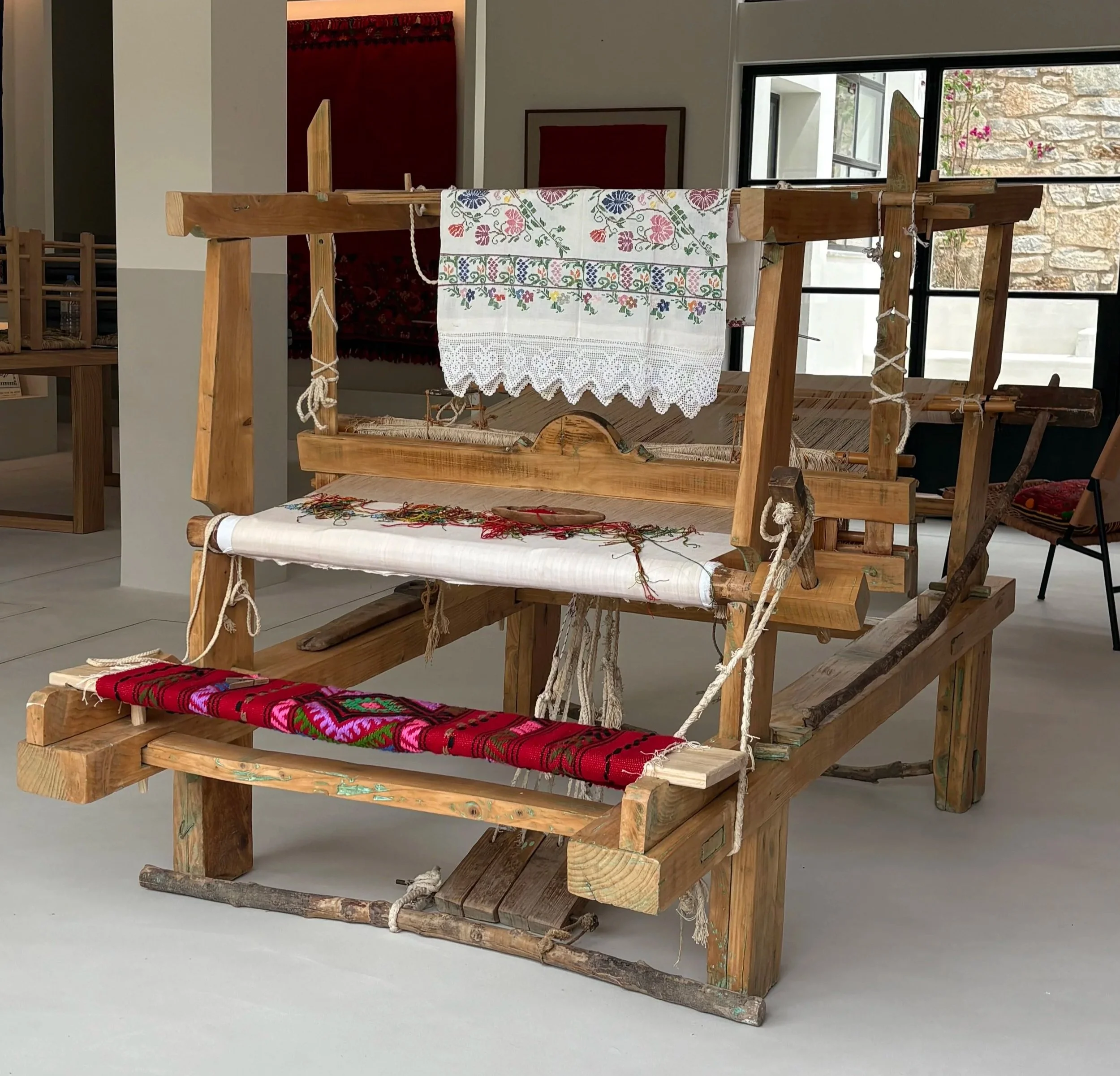
The Anastasia Ntagianta Family — Donation to the Center
Loom
c. 1970–1980
Mrs. Anastasia's loom was always kept in her kitchen, so that she could weave in the intervals between her household chores. She wove the everyday items her family needed, as well as their dowry textiles.
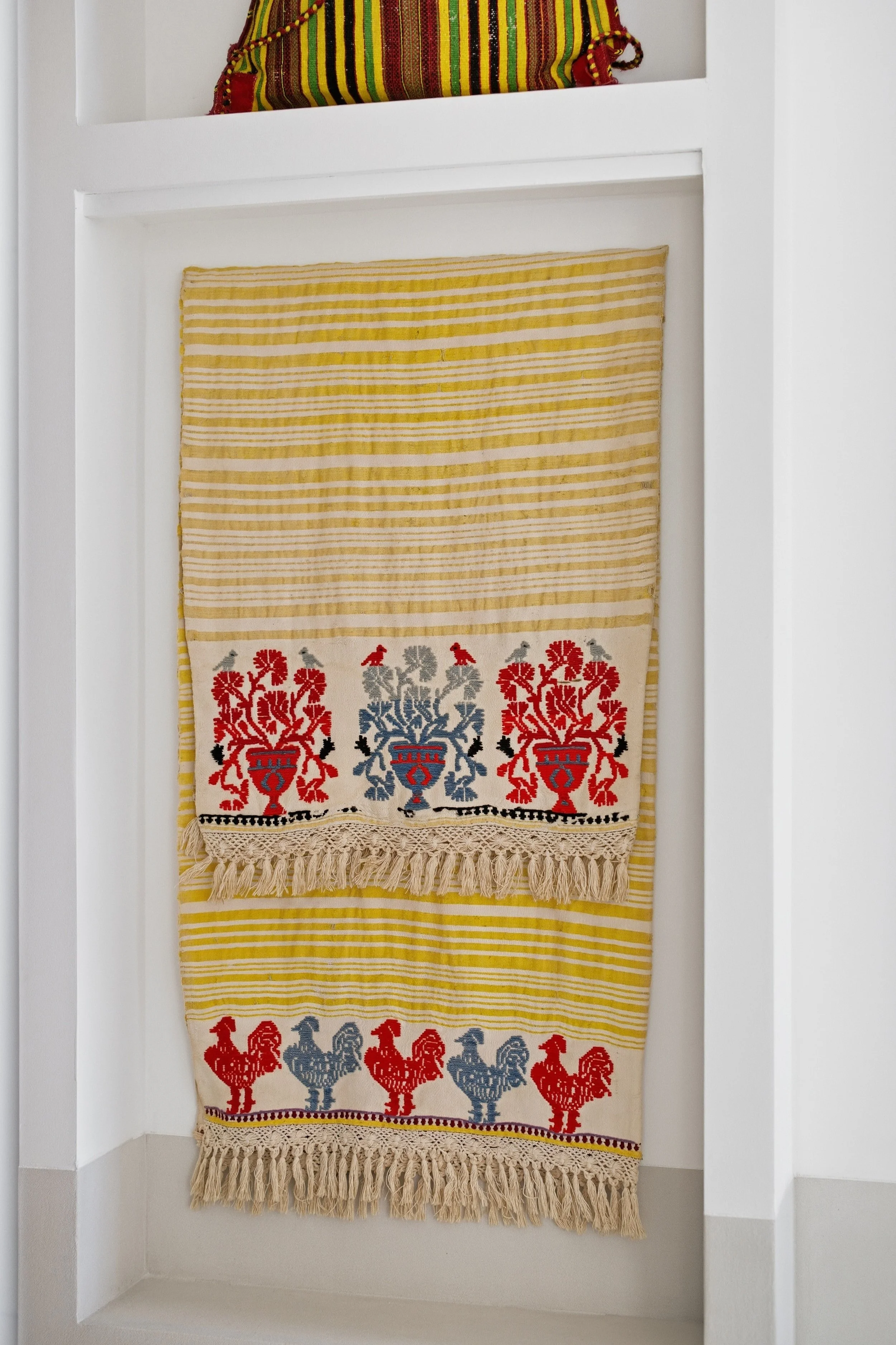
Family of Costantza Sbokou - Constantakopoulou
Chirami or Chrami
c. 1940
60 x 120 cm
A light and fine floor covering made of wool and cotton, with horizontal alternating stripes. It features different decorative designs at each end — on one side a row of roosters, on the other floral columns. It is crafted using the chain technique. The chrami was an essential item of the dowry and domestic weaving, used as a covering for beds or furniture, with its edges finished in knotted fringe or macramé. It is a family heirloom from Agapi Sbokou (Sbokovasilena).
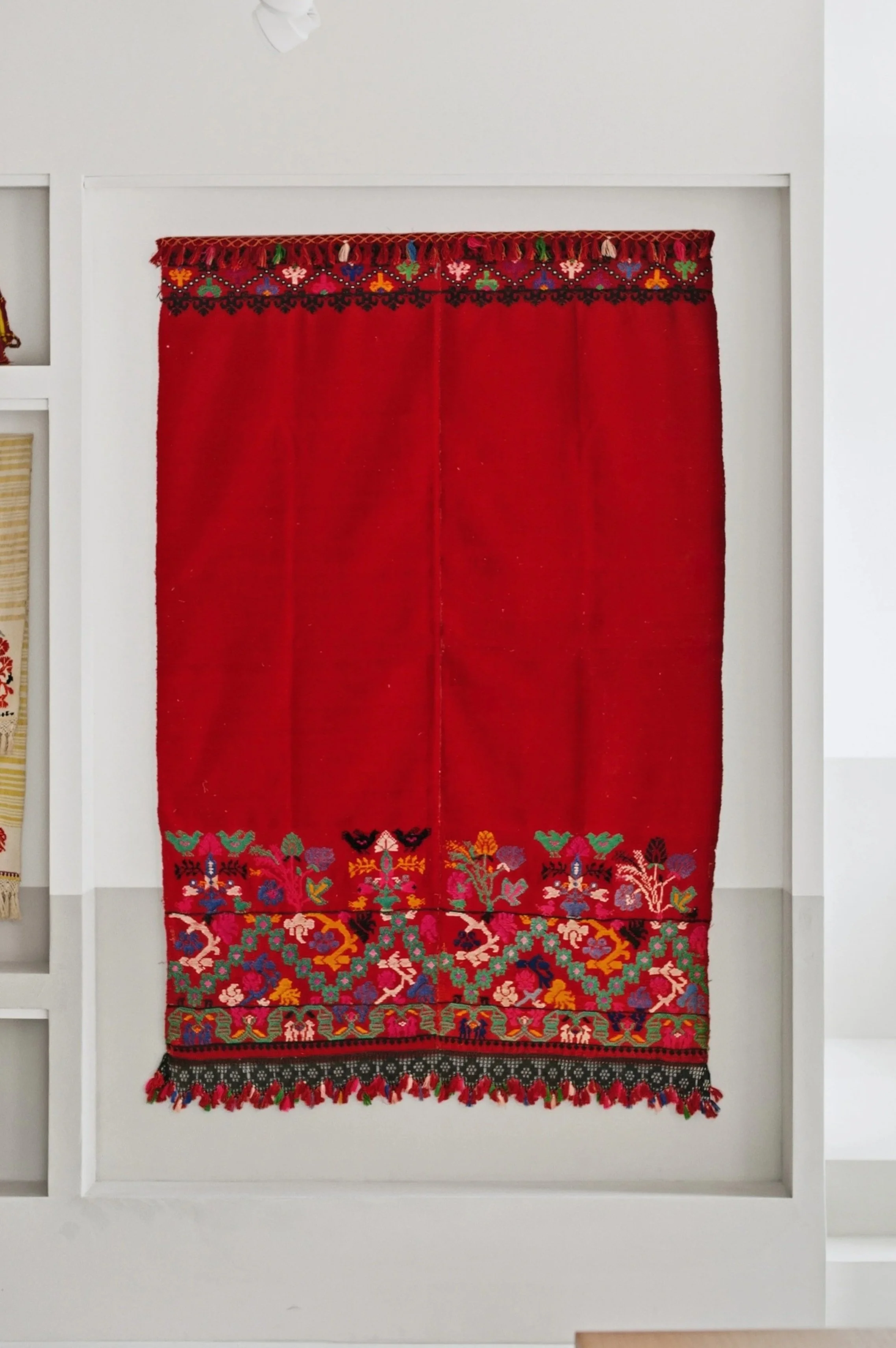
Family of Costantza Sbokou - Constantakopoulou
Ntamaki
c. 1950
134 x 225 cm
A textile woven with woolen yarns, its pattern created using the chain technique. The ntamaki was above all a decorative wedding textile. It was draped over the horse that accompanied the groom's brother, friends, and relatives as they went to collect the dowry from the bride's home. The groom's family would offer a vourgia of wine, a roasted cut of meat, and watermelon, and would receive the dowry along with a basil plant adorned with a cross bearing three apples. The unmarried young men of the clan would compete for the apples, in hopes of finding a good match. It is a family heirloom from Agapi Sbokou (Smpokovasilena).
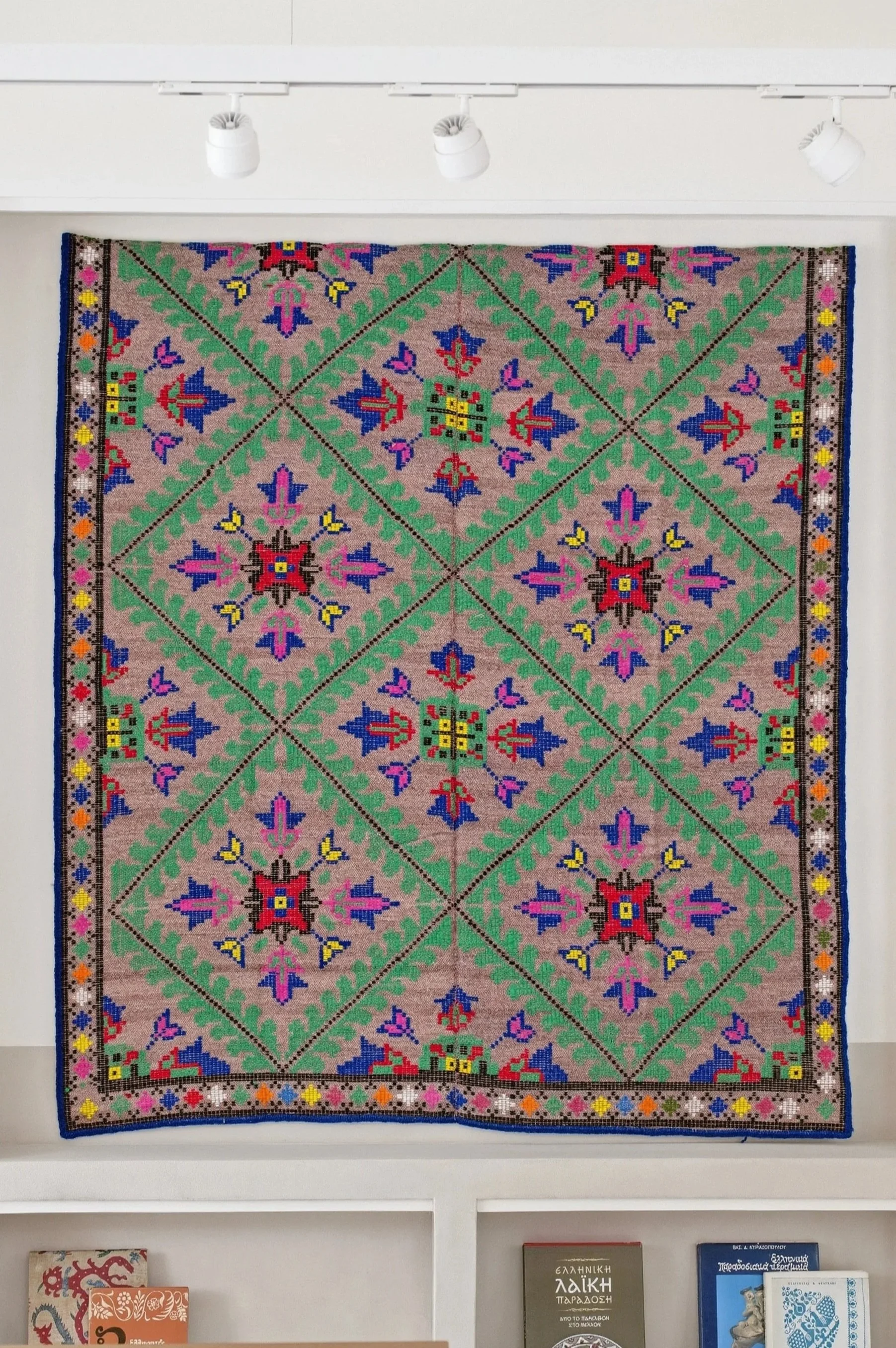
Family of Eva, Alexia & Agapi Kefalogiannis
Triopatitiri
c. 1960
164 x 223 cm
A bedcover woven with woolen yarns, featuring vibrant, multicolored designs. It was made using the triopatitiro technique — a traditional and particularly demanding weaving method for creating intricate patterns (known as xomblia) on a loom. It is characterized by the use of four heddles and four foot pedals, which give the technique its name. The textile is an heirloom inherited by the three daughters from the dowry of their mother, Maria Kefalogiannis, née Vrentzou (Tsouronікena), who grew up in Yenna and embroidered and wove throughout her entire life.
Family of Evangelia Spithouri
Vourgia
c. 1950
51 x 30 cm
Family of Ermioni Kalomoiri
Vourgia
c. 1950
51 x 30 cm
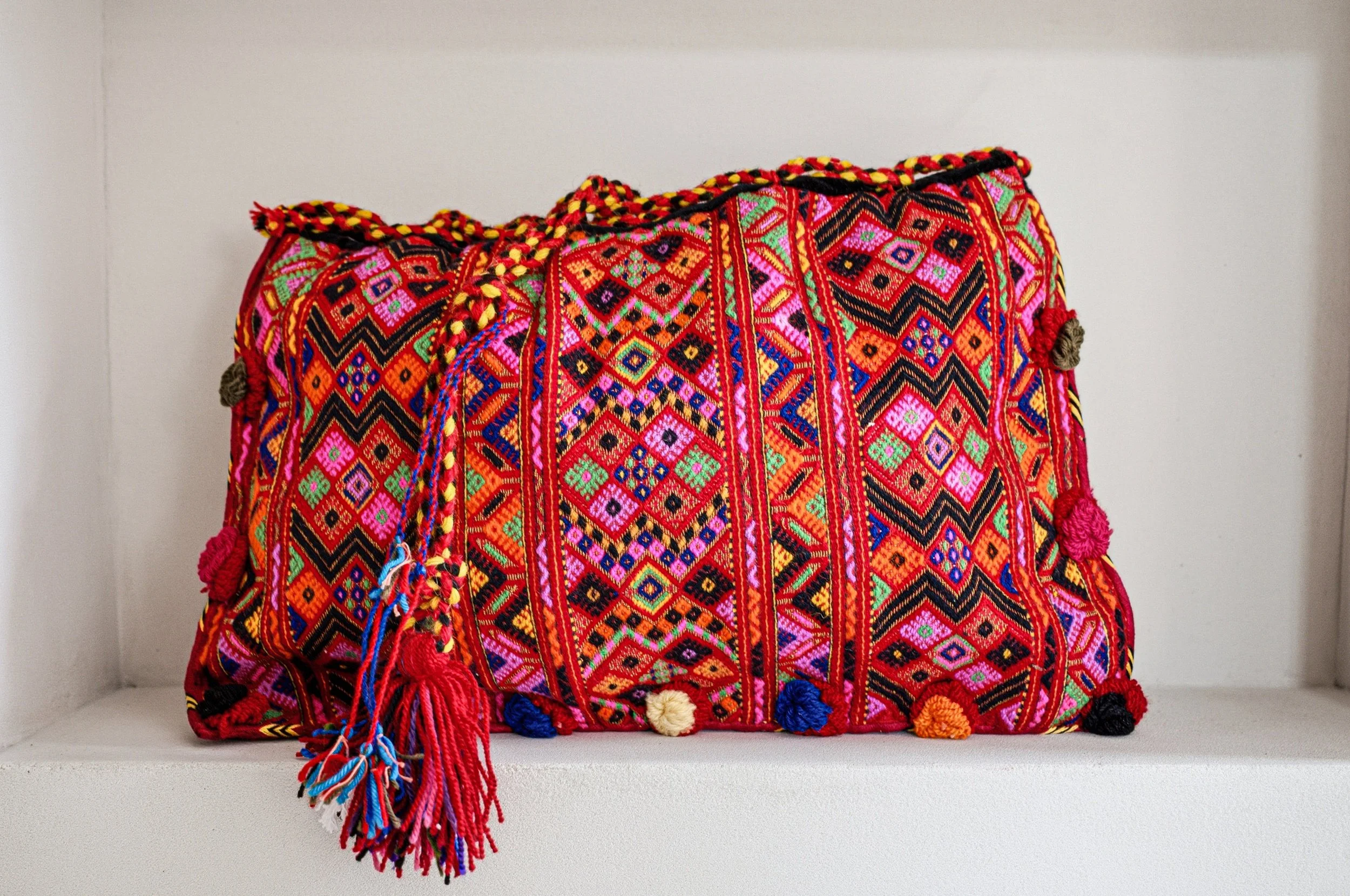
Antique vourgies of exceptional intricacy and high value. The collection consists of one pentarati, two mavrotrochatés, and four soufróxombla. In general, vourgies are structurally complex woven objects. They are woven with woolen yarns and gold thread, while the most ornate among them feature three pentarate rosettes and four soufroxombla on the front face, while the reverse was always simpler, bearing the characteristic striped pattern in various colorways.
Family of Agapi Sbokou (Smpokovasilena)
Rug — Kilim
c. 1950–1960
66 x 140 cm
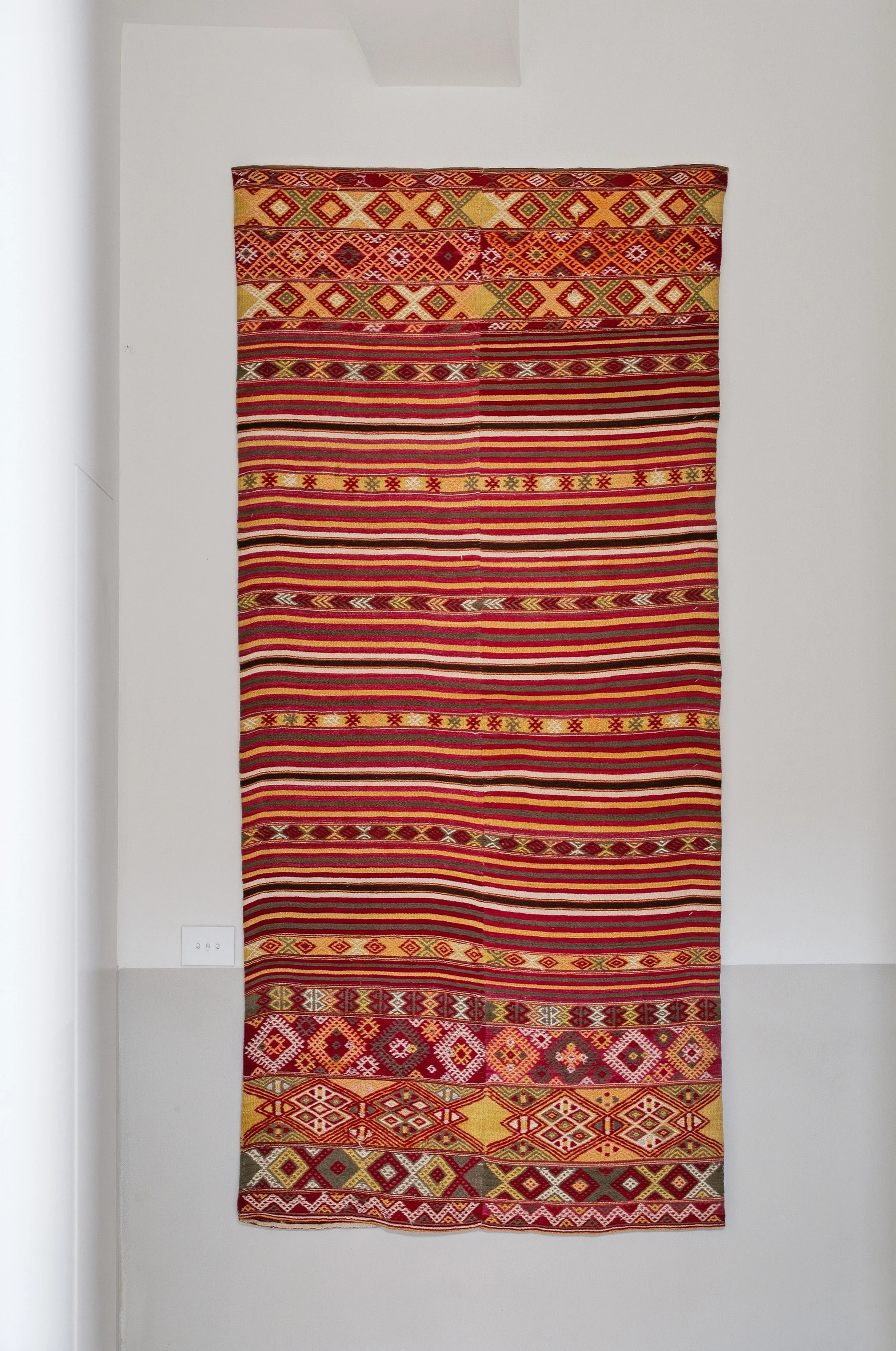
Its creation is dated to shortly after the war, while its design can be traced to well before it. Woven with woolen yarns and dyed with natural plant dyes. The design features geometric decoration at both ends and narrow geometric stripes in between.
The Aristea Xylouri Family
Patiti
c. 1950
77 x 274 cm
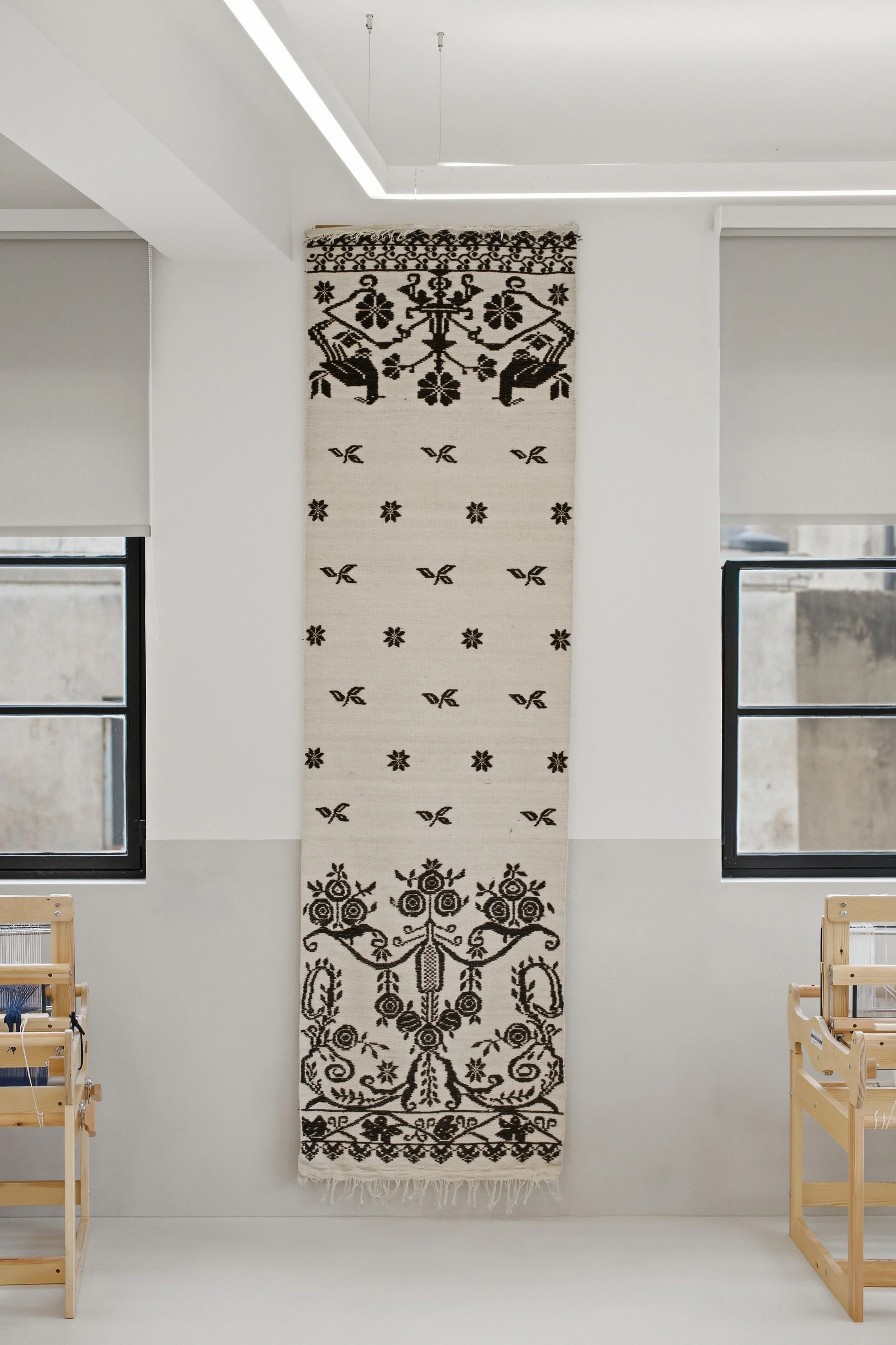
A blanket made of natural wool using the chain technique. The patiti, an inseparable element of folk heritage in rural areas, is often woven in Anogia using the two absolute natural colors of undyed wool: white and dark brown/black. The austere, raw color palette highlights the character of the technique and its close relationship with the landscape, the flocks, and the raw materials of the land. The designs at the edges draw inspiration from botanical or geometric motifs, while the center of the textile is sometimes left white.
The Athina Frysali Family
Patiti
c. 1950
75 x 265 cm
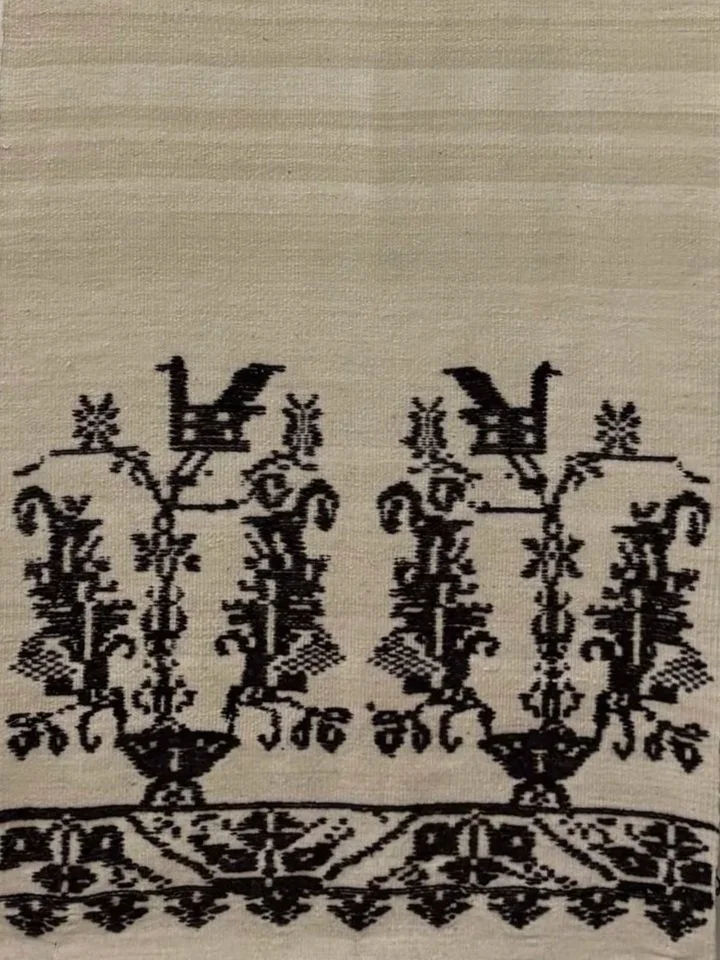
A blanket made of natural wool using the chain technique. The patiti, an inseparable element of folk heritage in rural areas, is often woven in Anogia using the two absolute natural colors of undyed wool: white and dark brown/black. The austere, raw color palette highlights the character of the technique and its close relationship with the landscape, the flocks, and the raw materials of the land. The designs at the edges draw inspiration from botanical or geometric motifs, while the center of the textile is sometimes left white.
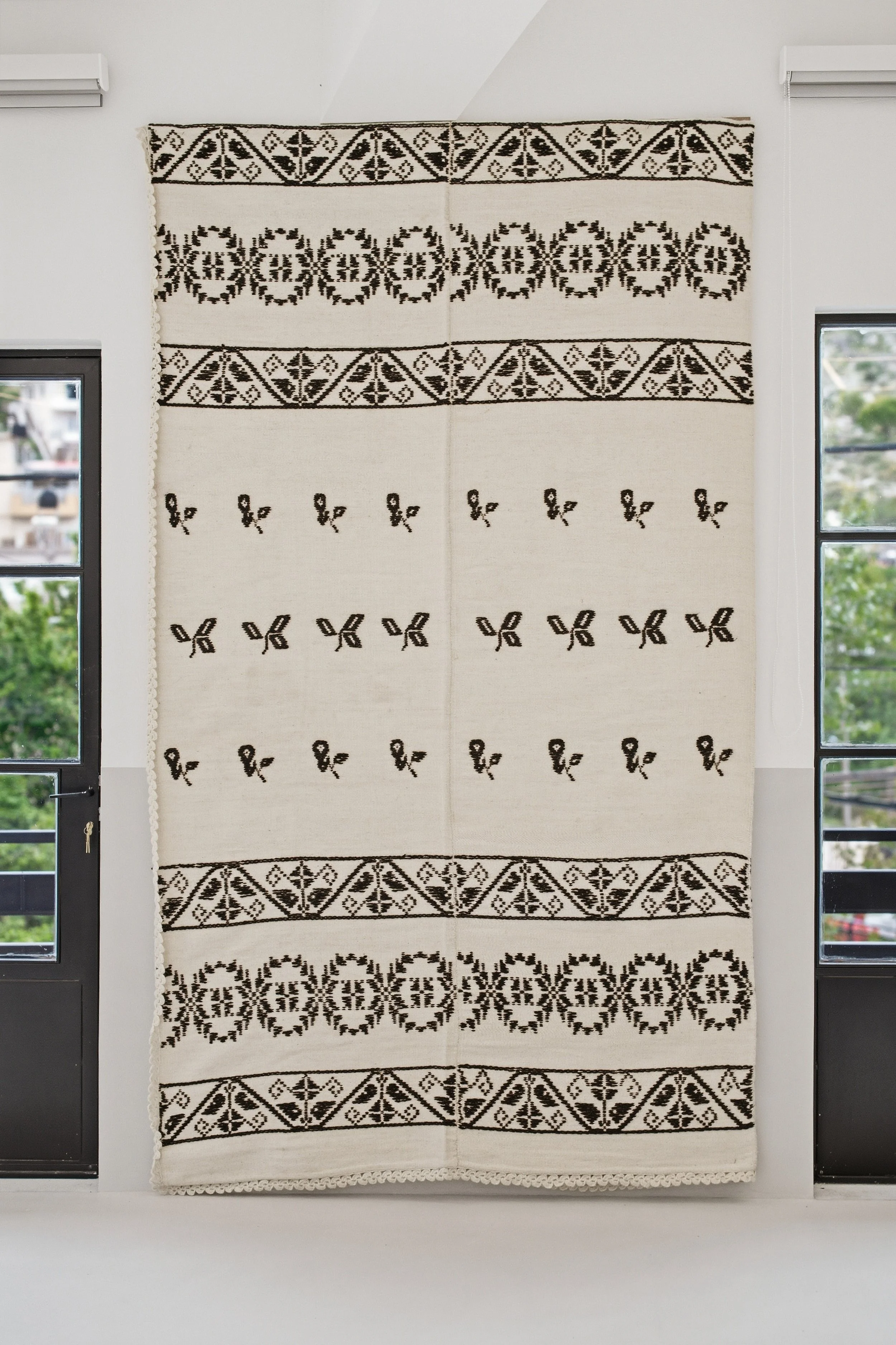
The Rena Ntagianta - Kalomoiri Family
Patiti
c. 1950
152 x 262 cm
A blanket made of natural wool using the chain technique. The patiti, an inseparable element of folk heritage in rural areas, is often woven in Anogia using the two absolute natural colors of undyed wool: white and dark brown/black. The austere, raw color palette highlights the character of the technique and its close relationship with the landscape, the flocks, and the raw materials of the land. The designs at the edges draw inspiration from botanical or geometric motifs, while the center of the textile is sometimes left white.
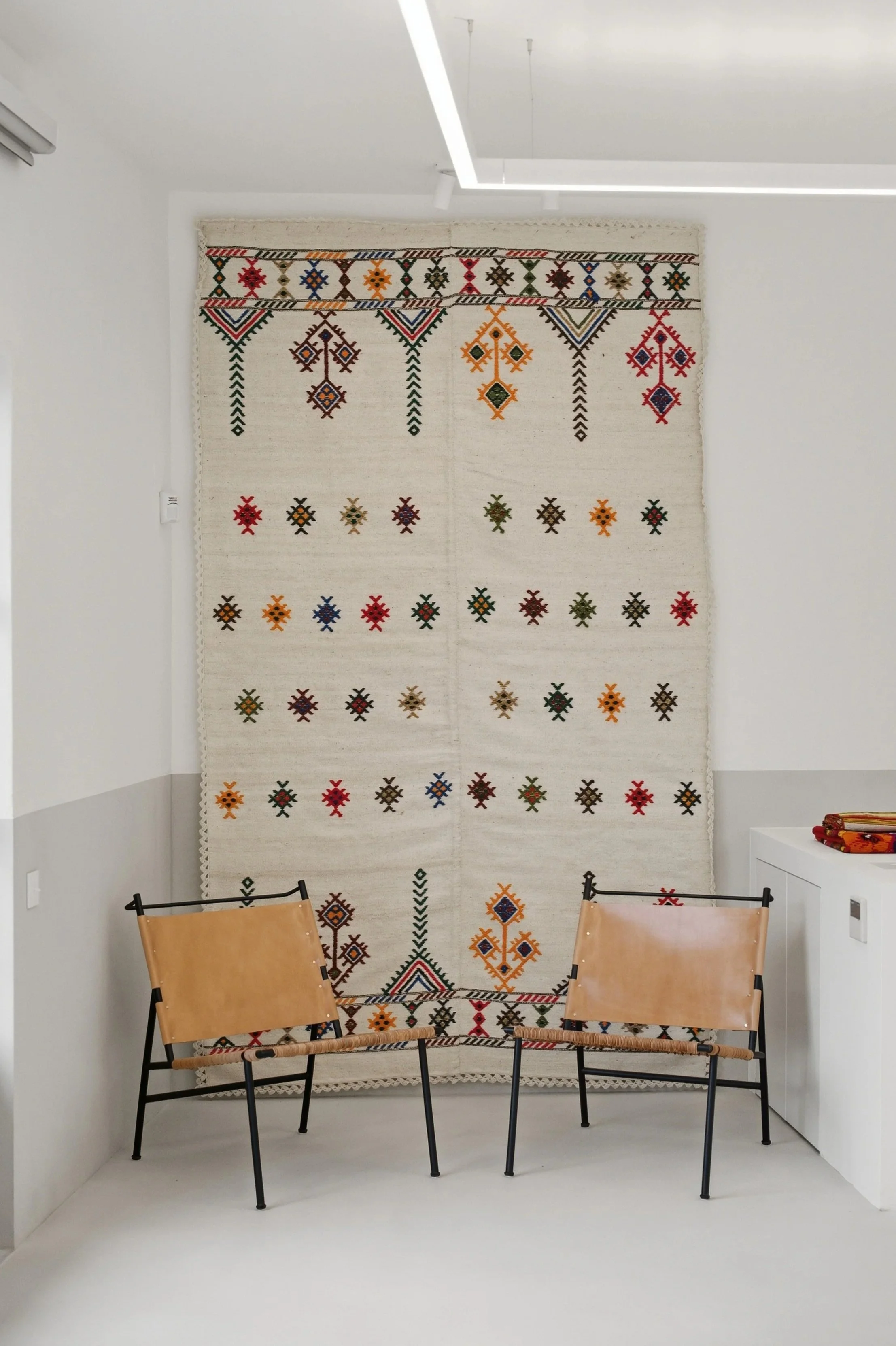
The Katerina Saloustrou Family
"Archaniotissa" Rug
c. 1970
172 x 280 cm
A traditional rug made from woolen yarns, known as the "Archaniotissa." It is an old traditional geometric design, here interpreted by the weaver on a white background with multicolored geometric patterns. A perimeter of white lace is sewn onto the textile as a border finish.
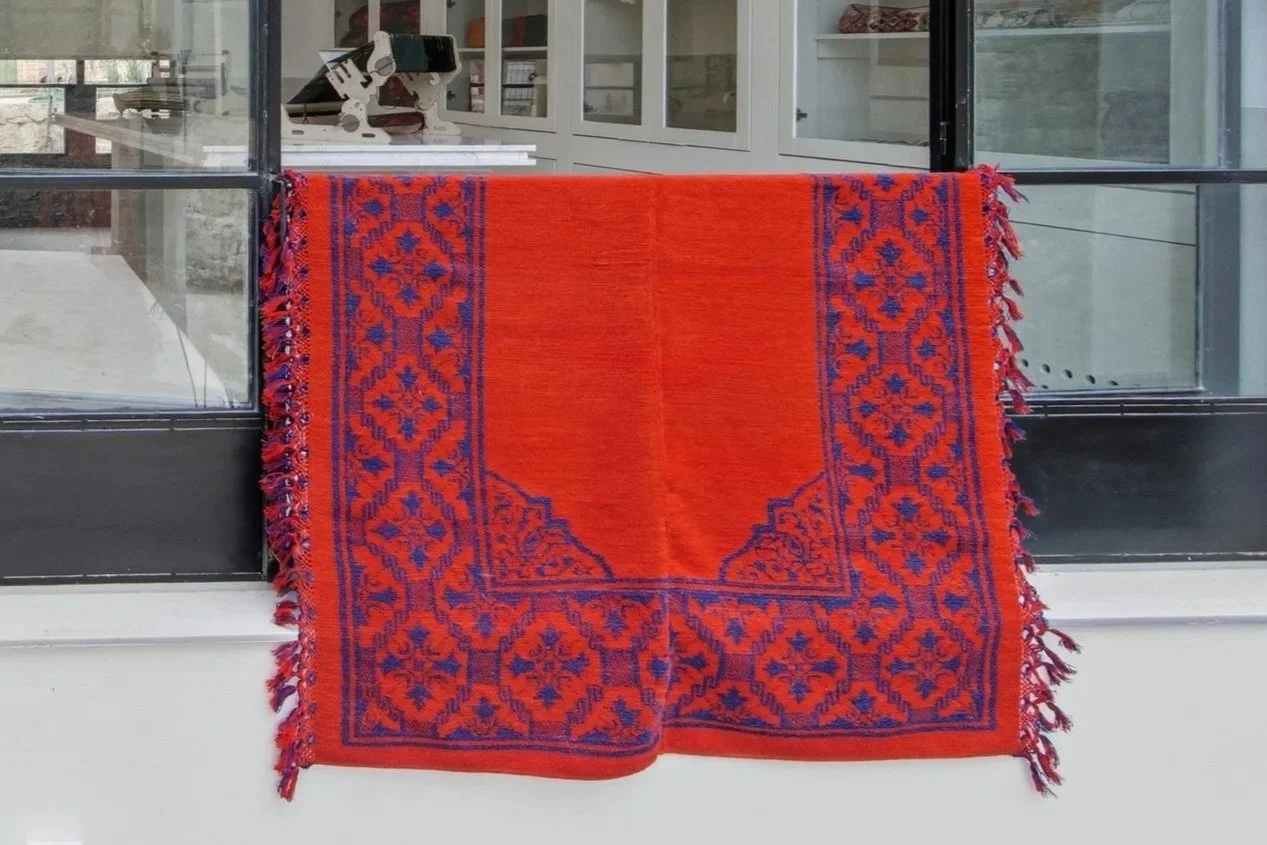
The Rita Skoula - Papadia Family
Patania
c. 1940
Woven from mitos woolen yarn using the kouskousé technique, in shades of orange and blue, it bears the distinctive and particularly significant motif of the cross or rosary pattern. The textile was made by Rita's grandmother before the war, and the design is connected to the pattern known as the "tile" of the Church of Agios Minas in Heraklion.